Adaptations in Gameplay Protocols When Transitioning Between Portable and Venue-Based Card Competitions
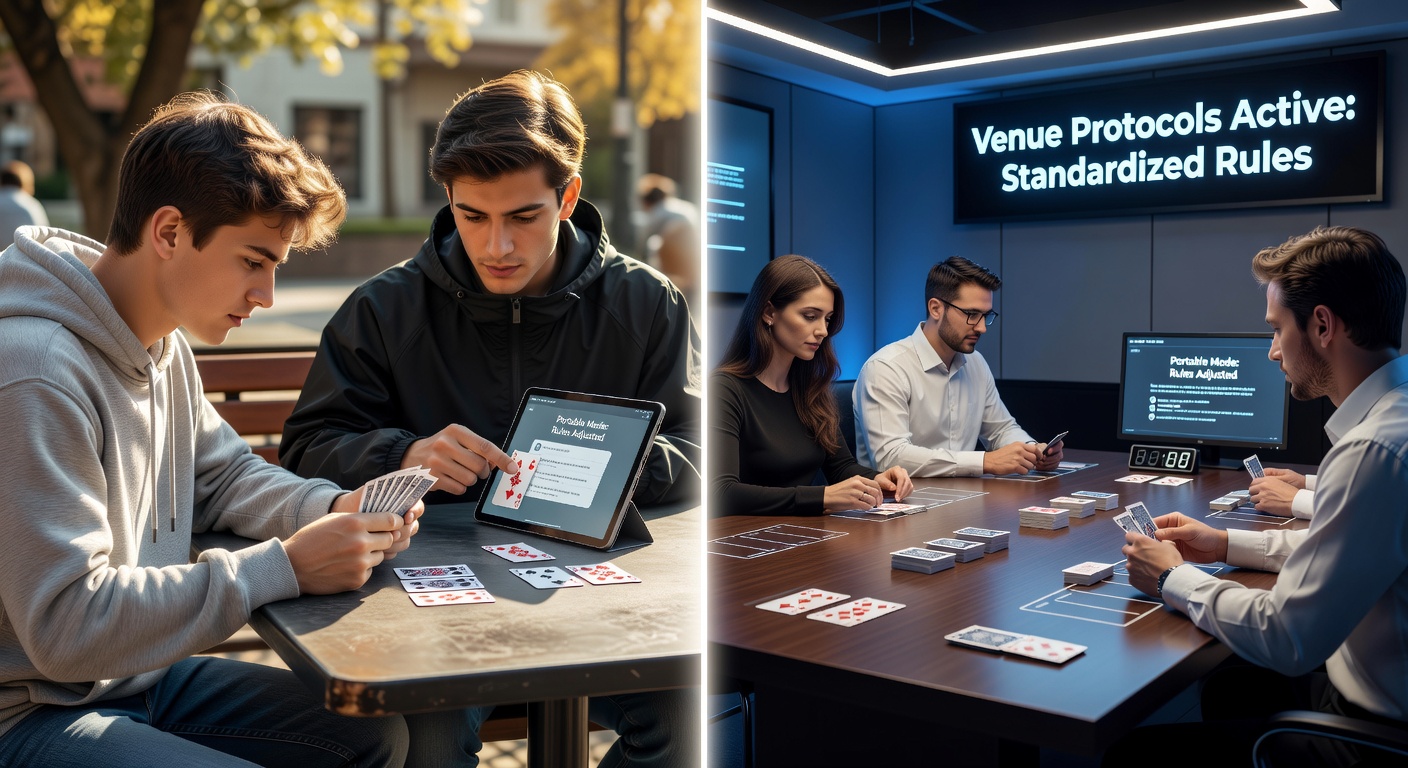
Card competitions have evolved significantly as participants move between portable formats such as mobile applications and venue-based events held in physical locations, and observers note that protocols adjust in areas ranging from verification processes to timing mechanisms to maintain consistency across environments. Research from industry reports indicates that these shifts occur frequently in regions with established gaming regulations, and data compiled through 2025 shows increased participation in hybrid events where players alternate between digital interfaces and live tables within the same tournament series.
Core Protocol Differences in Verification and Setup
Portable platforms rely on digital authentication systems including multi-factor logins and device fingerprinting while venue-based competitions require physical identification checks along with chip distribution handled by staff, and those who have studied these transitions point out that players must adapt their preparation routines accordingly because digital accounts often sync with live registration databases to prevent duplicates. According to records maintained by the Nevada Gaming Control Board, verification times in live settings average longer due to manual reviews yet reduce certain automated fraud vectors that appear more common in remote access points.
Timing and Action Sequencing Adjustments
Gameplay pacing changes when competitors switch formats because portable sessions allow variable response windows controlled by server algorithms whereas venue events enforce standardized clock intervals managed by dealers and floor personnel, and experts have observed that participants develop habits around these rhythms to avoid penalties during transitions. Studies conducted on tournament data reveal that average decision times compress in live venues by approximately 15 percent compared to mobile equivalents, which forces adjustments in strategic planning especially during high-pressure moments.
Equipment and Technology Integration Practices
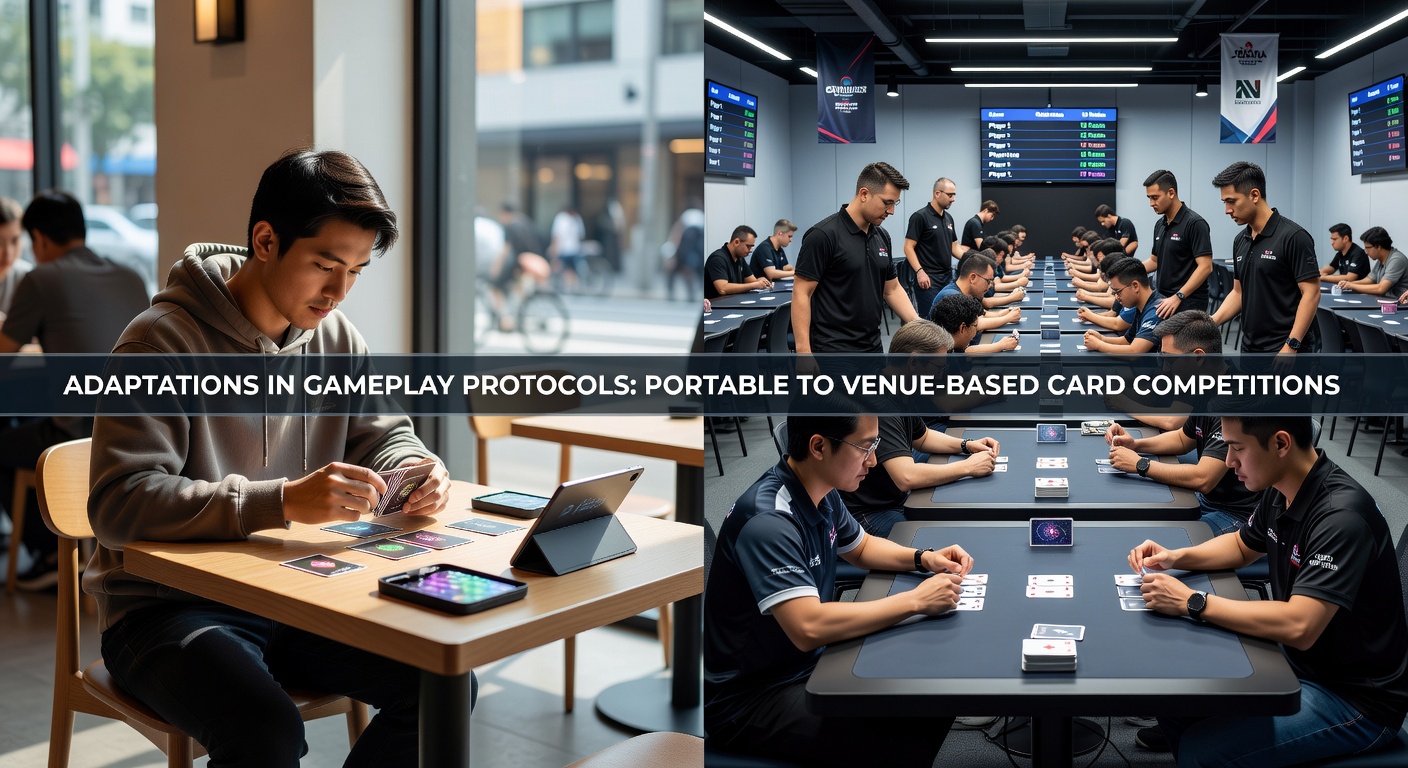
Venue-based competitions incorporate physical elements such as RFID-embedded chips and camera surveillance systems that track every card movement while portable formats depend on random number generators and encrypted data streams, and people who compete across both note that familiarity with these tools influences how rules get interpreted on the spot. In June 2026 several circuits plan events that blend both approaches, requiring organizers to align software protocols with on-site hardware standards to ensure seamless progression for entrants moving between stages.
Behavioral and Etiquette Protocol Shifts
Portable environments permit private actions without immediate visual feedback from opponents whereas venue settings expose body language and table talk that protocols must regulate to preserve fairness, and research indicates that training programs now include modules addressing these contrasts so competitors avoid unintended violations when changing contexts. Figures from European gaming associations show that disputes related to etiquette drop when clear cross-format guidelines get distributed in advance of multi-stage events.
Regulatory Frameworks Guiding Transitions
Agencies across different jurisdictions establish baseline requirements for both portable and venue operations, with the Australian Communications and Media Authority overseeing digital compliance standards while regional bodies in North America focus on live venue security measures, and those who've examined these frameworks find that harmonized reporting helps organizers manage player movement without regulatory conflicts. Data collected through 2025 demonstrates that events incorporating both formats maintain higher compliance rates when protocols reference multiple oversight sources simultaneously.
Case Examples from Recent Circuits
One documented series in early 2026 required participants to complete mobile qualifiers before advancing to venue finals, which led organizers to implement unified hand history review processes combining digital logs with physical footage, and observers note this reduced discrepancies in dispute resolutions. Similar approaches appear in other circuits where portable leaderboards feed directly into live seating assignments, creating continuity that benefits entrants familiar with the adapted sequencing.
Conclusion
Transitions between portable and venue-based card competitions continue to prompt refinements in verification, timing, technology use, and behavioral standards as organizers respond to participant needs and regulatory expectations, and available data suggests these adaptations support broader accessibility while preserving competitive integrity across formats. Events scheduled for June 2026 and beyond will likely build on existing models to further streamline the movement between environments.