Demographic Trends Reshaping Funding Approaches Across International Poker Circuits

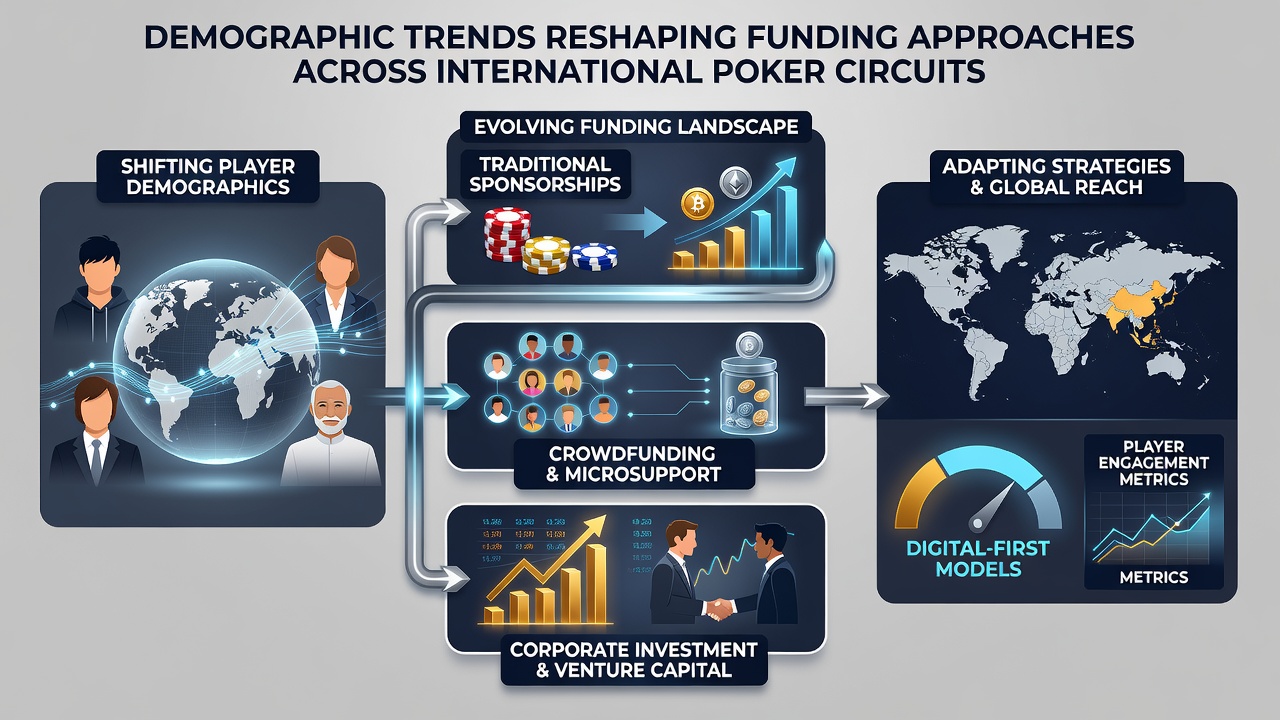
Demographic patterns in poker continue to evolve, and these changes directly influence how circuits secure sponsorships, structure prize pools, and manage staking arrangements across live and online platforms. Observers note that shifts in player age, geographic distribution, and participation diversity have prompted organizers to revise traditional funding models that once relied heavily on corporate backers and high-net-worth individuals from established markets. Data from industry reports shows that circuits now incorporate targeted initiatives to attract newer investor groups while maintaining liquidity for larger events.
Aging Core Player Base and Adjustments in Live Circuits
Traditional markets in North America and Europe still feature a substantial number of players over age 45 who entered the game during the poker boom of the mid-2000s, and this group maintains steady participation in major series. Funding approaches have adapted because these participants often rely on established staking networks and long-term relationships with backers rather than newer crowdfunding methods. Figures from regional gaming authorities reveal that live circuits have introduced hybrid prize structures that blend guaranteed payouts with performance-based bonuses to retain this demographic while appealing to emerging sponsors who seek broader audience reach. Circuits operating in July 2026 have scheduled additional side events with lower buy-ins to bridge generational gaps in funding streams.
Younger Participants from Asia and Latin America Drive Online Funding Changes
Younger players aged 21 to 34 originating from South Korea, Brazil, and India have increased their presence in online qualifiers and satellite tournaments, and this trend has altered how circuits allocate marketing budgets. Research indicates that these demographics favor digital payment platforms and micro-staking arrangements that allow smaller investors to participate in funding larger buy-ins. Organizers have responded by partnering with fintech providers to streamline entry fees and distribute portions of sponsorship revenue directly to regional qualifiers. What's notable is that circuits now allocate separate digital marketing funds to reach these groups, moving away from uniform global campaigns that once dominated promotional efforts.
Gender Participation Growth and Sponsorship Diversification
Women represent a growing segment of tournament entrants, with participation rates rising steadily in both regional tours and international stops, and this expansion has encouraged sponsors from lifestyle and technology sectors to enter the space. Data shows that circuits have created dedicated funding pools for mixed-gender events and women-only side tournaments to capitalize on this shift. Backing arrangements have expanded to include group investment models that accommodate professional players seeking support from diverse investor pools rather than single-entity deals. One study from the Australian Institute of Family Studies highlights how these participation increases correlate with adjusted sponsorship packages that emphasize inclusive branding.
Regional Economic Factors Influencing Staking and Prize Structures
Economic conditions in emerging poker markets have prompted circuits to modify how they distribute funding across different regions, with circuits in Eastern Europe and Southeast Asia adopting tiered prize guarantees that reflect local player demographics. Reports from the European Gaming and Betting Association detail how organizers now use performance metrics tied to regional participation numbers to determine sponsor contributions, rather than applying flat rates across all events. This approach allows circuits to maintain financial stability when demographic concentrations shift between live festivals and online series.
Impact on July 2026 Event Planning and Investor Strategies
Events scheduled for July 2026 already reflect these demographic adjustments through revised sponsorship tiers that prioritize digital engagement metrics alongside traditional attendance figures. Circuits have introduced early-bird funding options for younger investors who prefer shorter commitment periods, and data from multiple series indicates that these changes have broadened the base of contributors without reducing overall prize pool sizes. Those who track participation trends note that circuits now publish demographic breakdowns alongside financial reports to attract investors focused on specific audience segments.
Conclusion
Demographic trends continue to influence funding mechanisms in international poker circuits through adjustments in sponsorship models, staking arrangements, and prize structures that align with evolving player bases. Circuits operating across multiple regions have implemented targeted approaches that respond to age, gender, and geographic shifts while maintaining operational scale. These adaptations ensure that funding pathways remain viable as participation patterns develop further in the coming years.