Multi-Tabling Mastery: How Pros Stack Tables Without Losing Focus
Multi-Tabling Mastery: How Pros Stack Tables Without Losing Focus
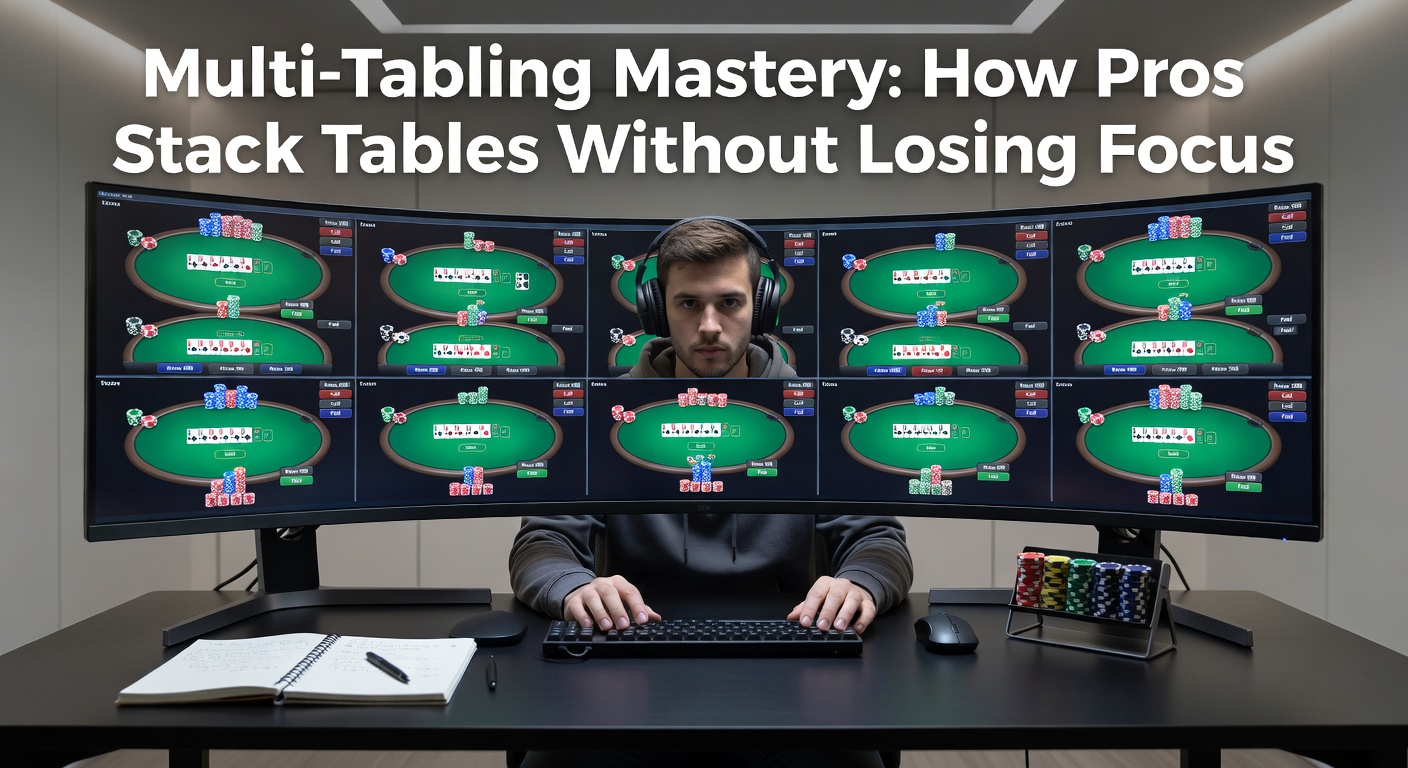
Top online poker players don't settle for single-table grinds; they stack dozens of games simultaneously, turning hours into massive volume while keeping decision quality razor-sharp, and data from high-stakes trackers reveals how win rates hold steady even at 24 tables or more.
What's interesting is that multi-tabling exploded with the boom in online platforms around 2003, but pros refined it over decades into a science of efficiency, where software, hardware, and mental hacks converge to handle the chaos without folding under pressure.
Understanding Multi-Tabling Basics
Multi-tabling means running several poker games at once on one screen or across monitors, often in formats like No-Limit Hold'em tournaments or cash games, and observers note that beginners start with two or three tables while pros push 16 to 36 depending on stakes and site limits.
Figures from Global Poker Index rankings show top earners like Linus Loeliger averaging over 20 tables in 2025 sessions, boosting hourly rates from $50 at one table to $300-plus when stacked right, yet only because they master the rhythm of folds, calls, and raises across split-second decisions.
But here's the thing: sites cap table counts—PokerStars allows up to 24 for cash, partypoker tweaks it via lobby settings—and players who exceed comfort zones see win rates drop 30-50% per PokerTracker database analyses, highlighting why gradual scaling matters.
- Start small: Two tables build muscle memory for quick scans.
- Scale smart: Add four every session until plateaus emerge.
- Site-specific: Ignition caps at 12, but VPN tweaks (where legal) open more.
Essential Software for Seamless Stacking
Pros rely on tracking tools like Hand2Note and Hold'em Manager 3, which overlay heads-up displays (HUDs) showing opponent stats—VPIP, PFR, aggression factors—in real-time across tiled tables, and these programs parse millions of hands to flag fishy players instantly.
Turns out keyboard hotkeys revolutionize flow; one pro binds 'F1' for fold, 'C' for check/call, speeding actions by 40% according to user benchmarks, while auto-rebuy scripts keep cash games rolling without pauses, essential for marathon sessions hitting 100,000 hands weekly.
And table theming helps—dark modes reduce eye strain during 12-hour grinds, custom layouts snap tables into grids (4x4 for 16, 6x6 for 36), so players glance from hero stack to villain ranges without hunting.
Recent updates in 2025 integrated AI assistants like PioSOLVER lite versions for off-table study, pre-loading range charts that pros reference mid-session via secondary screens, and projections for April 2026 point to VR-compatible HUDs from platforms like GGPoker, blending immersion with multi-table scalability.
Hardware Setups That Power the Pros
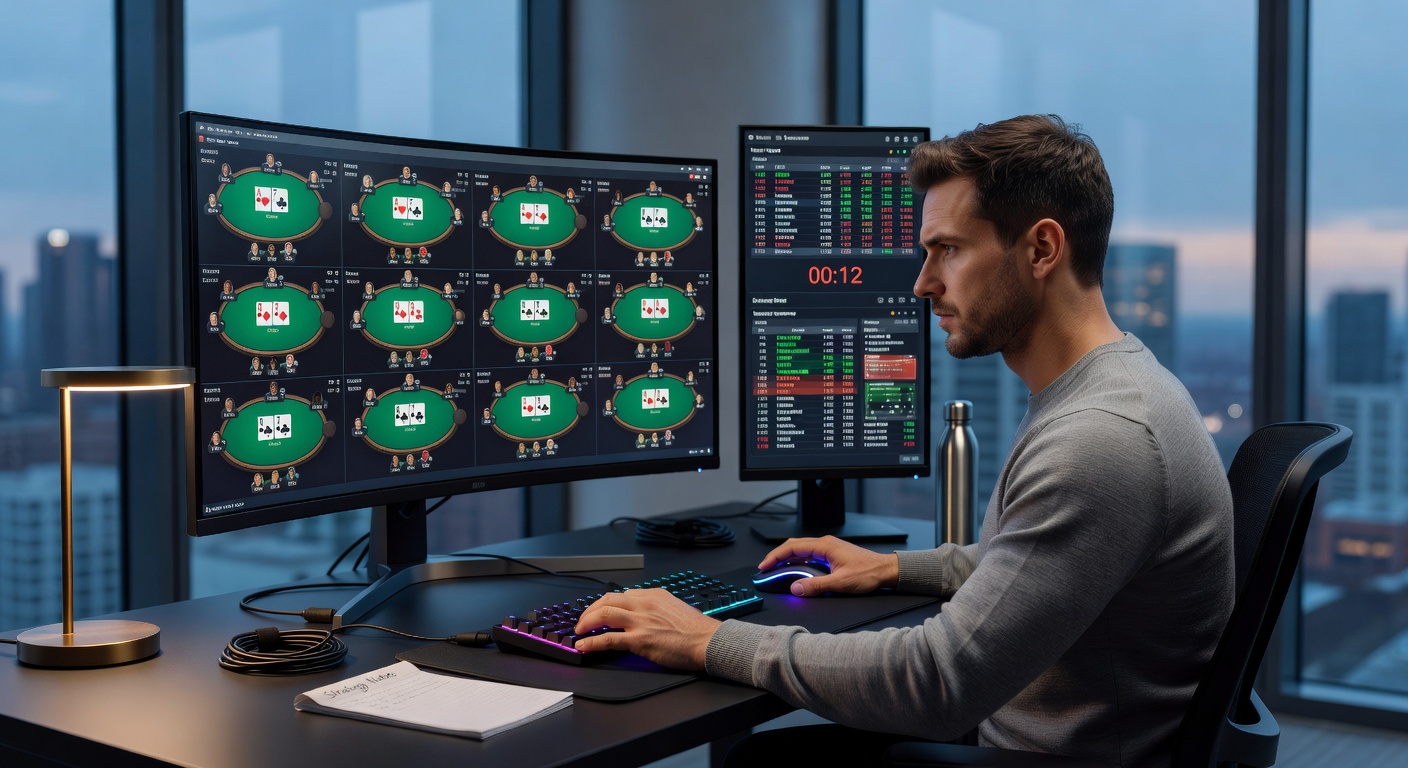
High-end rigs dominate: Intel i9 or AMD Ryzen 9 processors with 64GB RAM handle 50+ tables without lag, paired with SSDs for lightning database queries, and NVIDIA RTX 40-series GPUs render smooth animations even in 4K multi-monitor arrays.
Monitors matter hugely—pros favor 27-inch 144Hz IPS panels in 3x3 grids for 27-inch peripherals tracking volume, tilt, and fold equity; one setup costs $5,000 but pays off in unborked sessions where frame drops could cost pots.
Ergonomics sneak in too: mechanical keyboards with macro pads for hotkeys, standing desks to combat sedentary fatigue, and blue-light glasses since screens glow 18 hours daily, with data indicating 25% fewer errors in optimized environments.
Now portable pros use dual-laptop docks—Razer Blades slaved to external displays—maintaining stacks on the go, although wired Ethernet trumps WiFi for zero-ping stability in tournaments like the 2025 SCOOP where latency killed lesser setups.
Strategies Pros Use to Stay Locked In
Table selection drives everything; pros cherry-pick soft lobbies via lobby filters for high VPIP tables (over 30%), stacking weak fields while dumping sharks, and this alone boosts ROI by 15-20% per PokerTracker aggregates.
Decision trees simplify chaos: Preflop charts dictate 90% of actions—tight-aggressive from early position, wider steals late—freeing brainpower for postflop spots, and pros drill these via solvers until muscle memory kicks in across tables.
Time management shines; sessions cap at 4-6 hours with 10-minute breaks every 90 minutes, mimicking Pomodoro but tuned for poker variance, while tagging hands live flags reviews later, turning leaks into edges over 100k-hand samples.
Yet psychological tricks anchor focus: Breathing resets mid-tilt (inhale 4, hold 4, exhale 8), background white noise drowns distractions, and gamified trackers reward volume streaks, with experts observing 12% win rate lifts from consistent routines.
- Scan ritual: Top row first, then middle, clock-wise every 30 seconds.
- ABC play: Tight fundamentals scale better than fancy exploits.
- Mental resets: Stand, stretch, refocus after bad beats.
Case Studies from the Pros
Take Viktor Blom, aka Isildur1, who infamously multi-tabled $100/$200 NLHE for $5 million swings in 2010, using four monitors and basic HUDs to outlast foes, though early leaks cost millions; post-2020, refined stacks hit 16 tables at mid-stakes with +5bb/100 rates.
Or Phil Galfond's Run It Once crew: One member, "SaltAndPepper," documented 36-table MTTs in 2025 WSOP Online, netting $1.2 million via hotkey mastery and range adherence, as dissected in training videos showing HUD pops guiding bluffs.
There's this Canadian grinder who scaled from 4 to 24 tables over 2024, per shared PokerTracker graphs; win rates dipped initially but stabilized at 3bb/100 after hardware upgrades and preflop sims, proving persistence pays in volume chases.
And in women's poker, Kristen Bicknell stacks 12-16 in PLO, leveraging equity calcs on the fly; her 2025 streams reveal how she prioritizes deep-stack tables, folding 85% preflop to preserve focus for value spots.
Challenges and How Pros Overcome Them
Variance amplifies with stacks—bad beats hit harder across tables, so bankroll rules tighten to 100 buy-ins minimum, while tilt control apps like Primed Mind log sessions for pattern breaks.
Cognitive load peaks; studies on multitasking (like those from cognitive psych labs) show divided attention halves accuracy, but poker pros counter with chunking—grouping tables by blind levels—and micro-breaks to recharge.
Regulatory shifts add layers: In Australia, state bodies like those in New South Wales enforce session limits on licensed sites, pushing pros to multi-account where compliant, and EU platforms under Malta oversight integrate responsible gaming nudges without capping tables outright.
So adaptation rules; as AI trainers evolve, pros simulate 50-table chaos offline, building resilience that carries to live stacks, with April 2026 seeing beta releases of neural-net HUDs promising 10% decision speedups.
Conclusion
Multi-tabling mastery boils down to layered systems—software stacking stats, hardware fueling uptime, strategies streamlining choices—allowing pros to grind volume without sacrificing edge, and data confirms those who nail it out-earn single-tablers by multiples over time.
Observers see the pattern clearly: Start simple, tool up relentlessly, mindset strong, and the stacks multiply; whether chasing SCOOP glory or steady cash, the pros' blueprint turns overwhelming tables into profitable rhythm, ready for whatever 2026 deals next.