Regional Payment Processing Shifts Reshaping Access Patterns in European Card Rooms
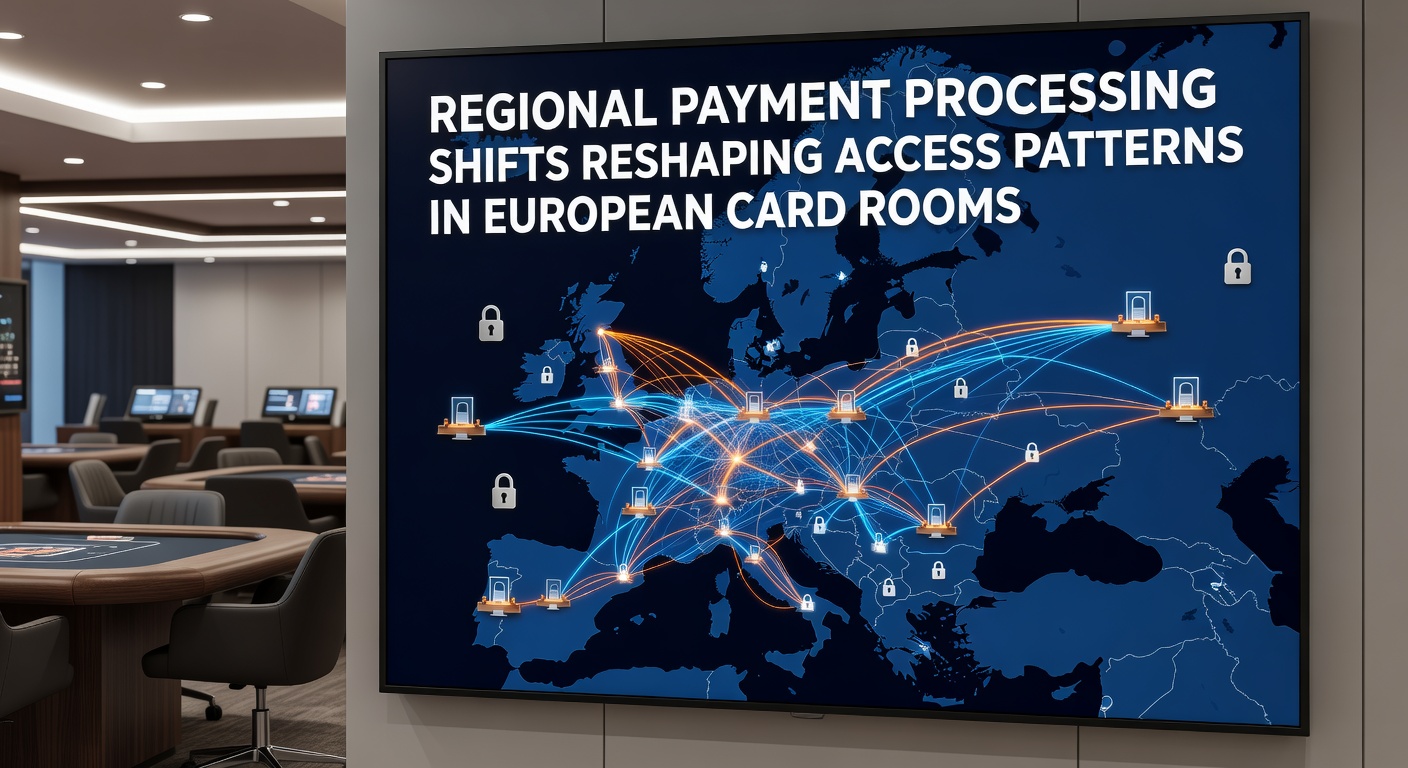
Payment infrastructure changes across the European Union have started to influence how players reach card rooms in multiple countries, and observers note that these adjustments stem largely from updates to the Payment Services Directive framework along with national banking rules that took effect in recent years. Data from the European Central Bank shows that instant payment volumes rose by 45 percent between 2023 and 2025, creating new pathways for funds to move into gaming venues while also introducing compliance layers that vary by region.
Core Drivers Behind the Processing Changes
Banking institutions began implementing stronger customer authentication requirements under revised EU standards, which forced card room operators to adapt their deposit and withdrawal systems to maintain compatibility with local financial networks. Researchers at the European Payments Council documented that these authentication steps reduced certain cross-border transaction failures by 30 percent in tested markets, yet they simultaneously lengthened processing times for some domestic users who rely on older banking apps. Operators in Germany and the Netherlands responded by integrating open banking interfaces that allow direct account verification without manual card entry, whereas facilities in southern European markets continued to favor card-based rails that align more closely with existing consumer habits.
Regional Differences in Transaction Flows
Access patterns diverge sharply once national rules layer on top of the EU baseline. In France, card rooms must route all electronic transfers through licensed payment institutions that report activity directly to the Autorité de Contrôle Prudentiel et de Résolution, a requirement that has shifted many smaller venues toward partnerships with domestic banks rather than international processors. Meanwhile, Italian operators have leaned into the Bancomat instant payment network, which handles over 60 percent of recent gaming deposits according to figures released by the Bank of Italy in early 2025. Spanish card rooms, by contrast, report heavier use of Bizum-linked accounts, a system that processes transactions within seconds and now accounts for nearly half of all player funding at major venues in Madrid and Barcelona.
Effects on Player Mobility and Venue Reachability
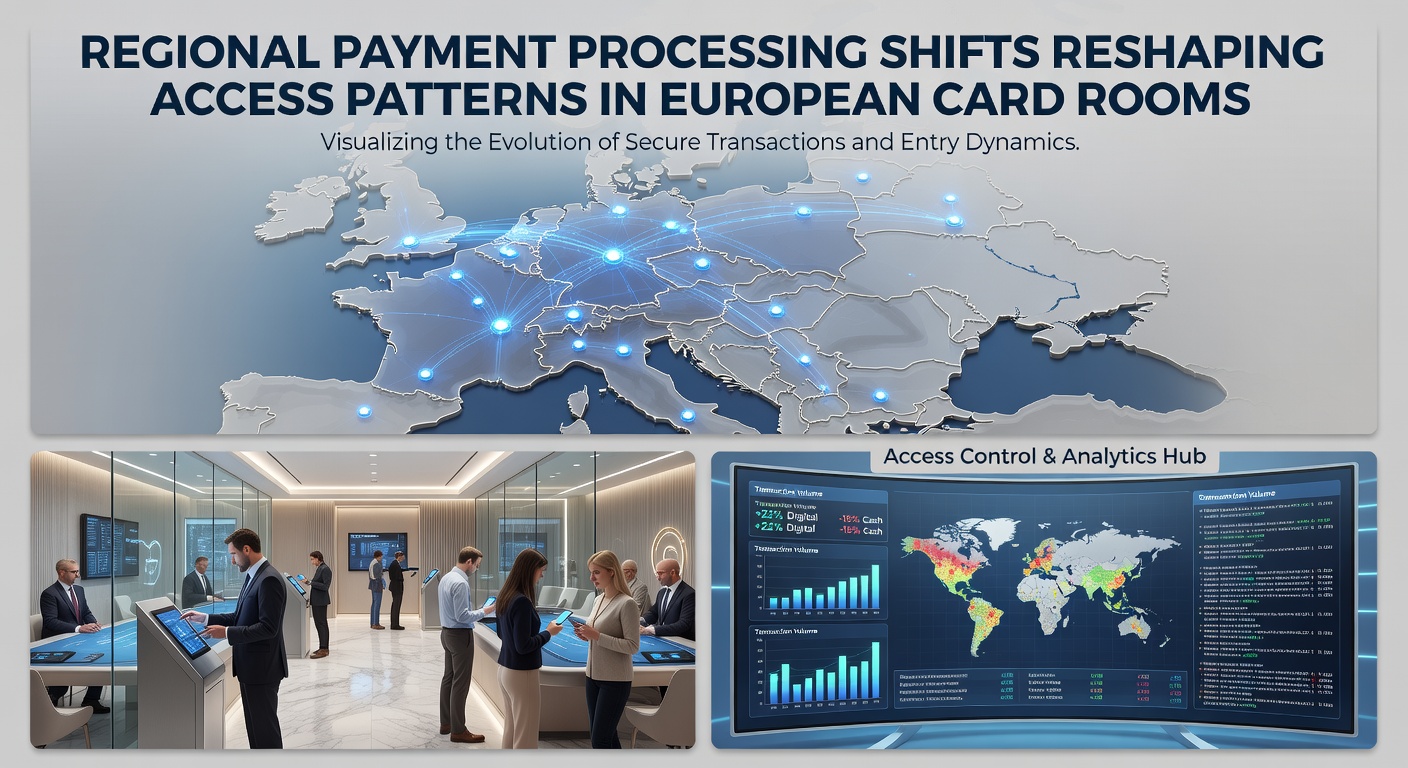
These processing variations have begun to reshape which card rooms players choose to visit, especially for those traveling between countries. Data compiled by the European Gaming and Betting Association indicates that cross-border participation at live card events increased by 18 percent in 2025, yet the growth concentrated in jurisdictions where payment rails align quickly with visitor banking apps. Venues that adopted multi-currency settlement tools saw steady foot traffic from neighboring regions, while others relying on slower SEPA credit transfers experienced drop-offs during peak tournament weeks. One study released by the University of Amsterdam in late 2025 tracked 2,400 frequent players and found that those using instant payment options visited facilities outside their home country 2.3 times more often than peers limited to traditional wire methods.
Operational Adjustments at the Venue Level
Card room management teams have responded with targeted system upgrades timed around regulatory deadlines. Facilities in Belgium and Austria introduced kiosk-based instant verification stations that cut onboarding from fifteen minutes to under three, according to internal metrics shared with the Belgian Gaming Commission. Larger chains in Scandinavia rolled out unified wallets that sync across borders, allowing balances to transfer without repeated compliance checks when players move between partner sites. Smaller independent rooms, however, often lack the capital for such integrations and instead rely on third-party aggregators that absorb the authentication overhead in exchange for transaction fees.
Looking Ahead to Mid-2026 Developments
Scheduled updates to instant payment schemes set for May 2026 are expected to extend real-time settlement capabilities to additional euro-area countries, including expanded support for non-euro currencies used in certain eastern European markets. Industry reports project that these enhancements could further compress settlement windows at card rooms that currently experience multi-day delays on international deposits. Operators monitoring the rollout through the European Payments Council have begun pilot programs that test the new rails in controlled environments ahead of the formal launch date.
Conclusion
Regional payment processing shifts continue to alter how players interact with European card rooms, driven by regulatory updates, national infrastructure choices, and operational adaptations at the venue level. Evidence from central banks and industry associations shows measurable changes in transaction speed, cross-border participation, and system compatibility, with further adjustments anticipated once the May 2026 instant payment expansions take effect. These developments remain grounded in measurable data rather than speculation, offering a clear picture of evolving access patterns across the continent.