The Evolution of Reward Systems in Digital Table Games and Their Role in Shaping Long-Term Player Habits Across Borders
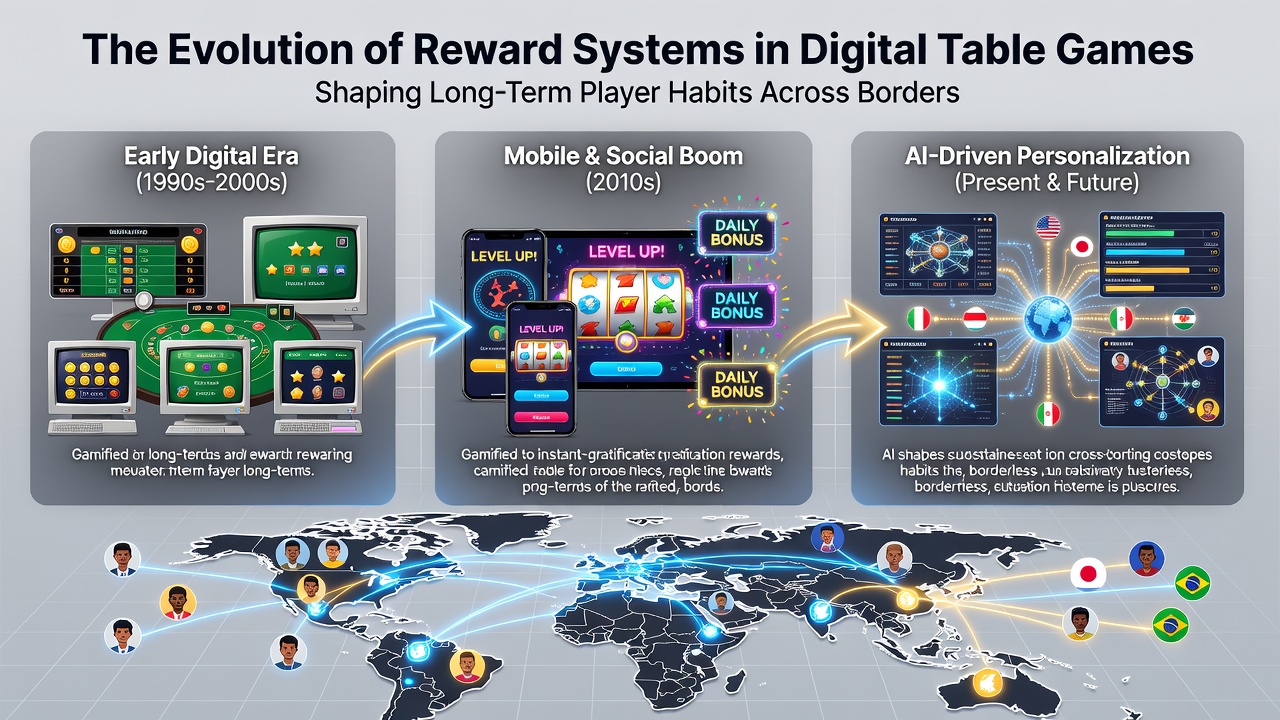
Digital table games have incorporated reward systems that developed from basic sign-up bonuses in the early 2000s into sophisticated loyalty frameworks, and these structures now influence participation patterns that span multiple countries and regulatory environments. Platforms track player activity through points accumulation, tier progression, and tailored promotions that adjust based on frequency and volume of play, while data from various markets shows consistent patterns in how these incentives extend session lengths over time.
Early Structures and Initial Implementation
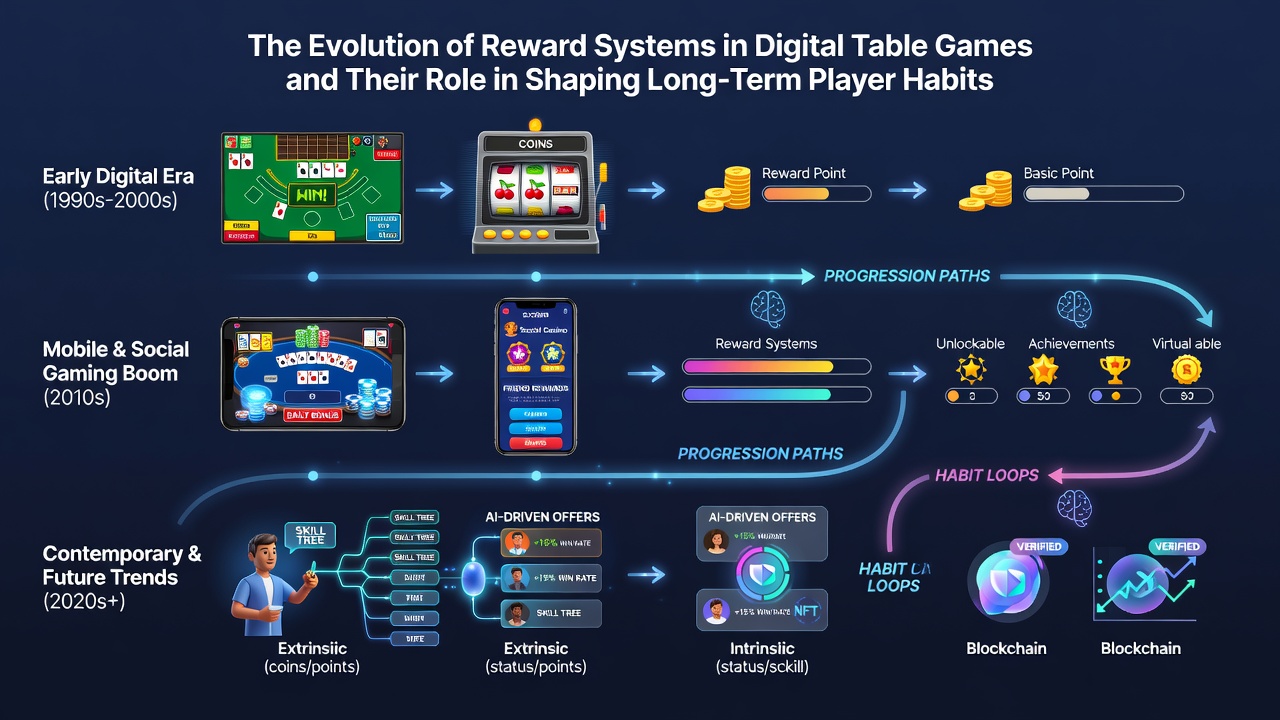
Reward mechanisms started with straightforward deposit matches and free play credits that operators introduced when online table games first gained traction, yet these simple offers quickly expanded into cumulative point systems where participants earned credits redeemable for cashback or additional game time. Researchers documented that such programs encouraged return visits within the first few months of launch, and cross-border operators adapted similar models to comply with local rules in Europe, Asia, and North America.
Technological Shifts Driving Complexity
Advancements in analytics software allowed platforms to segment users according to behavioral data, which in turn produced dynamic rewards that changed in real time based on individual play history. Machine learning models now predict optimal bonus timing, and operators apply these insights to maintain engagement levels across different time zones. In June 2026 several major platforms rolled out unified reward ledgers that let players carry progress between regional sites, a move that synchronized incentives for users who travel or access games from multiple jurisdictions.
Regional Adaptations and Cross-Border Patterns
European operators often emphasize cashback tiers tied to monthly activity thresholds, whereas Asian markets integrate social ranking elements that compare player standings within loyalty clubs. North American platforms blend both approaches by offering hybrid structures that combine monetary rewards with exclusive tournament access. Data compiled by the European Gaming and Betting Association indicates that players exposed to consistent cross-border reward continuity demonstrate higher retention rates than those limited to single-market programs.
Influence on Sustained Participation Habits
Long-term habit formation appears linked to the predictability and escalation of rewards, because tiered systems create visible progress markers that players reference when deciding whether to continue sessions. Studies from academic groups in Australia and Canada reveal that participants who reach intermediate loyalty levels tend to maintain weekly activity for periods exceeding twelve months, and these patterns hold across different regulatory frameworks. Operators adjust reward velocity to prevent fatigue, yet the underlying structure still channels behavior toward repeated logins and extended play intervals.
Measurement of Habit Metrics Across Markets
Industry reports track metrics such as average sessions per week, average spend per session, and interval between visits, and these figures show measurable shifts once reward systems incorporate personalization. One analysis conducted across multiple platforms found that players receiving algorithm-driven bonuses returned 28 percent more frequently than control groups during the first six months of implementation. Such statistics come from aggregated platform data rather than individual case studies, which allows observers to identify trends that persist regardless of cultural differences in gaming preferences.
Regulatory Considerations Shaping Future Directions
Government bodies in several jurisdictions now require transparency in how reward algorithms allocate benefits, and this requirement has prompted operators to publish clearer terms around point expiration and tier qualification. The Responsible Gambling Council of Canada has examined how these disclosures affect player decision-making, noting that clearer information correlates with more deliberate participation choices over extended periods. Platforms continue to refine reward delivery methods while maintaining compliance across borders, which produces evolving systems that balance engagement goals with oversight demands.
Conclusion
Reward systems in digital table games have moved from rudimentary incentives to interconnected, data-driven frameworks that operate across national boundaries, and available evidence links these mechanisms to measurable changes in how players structure their activity over months and years. Continued monitoring by regulatory and research organizations will determine how these systems develop further as technology and policy intersect in new ways.